
GRAND IRIAN TOURS · SOUTHERN PAPUA, INDONESIA
Kombai Tours: Treehouses, Sago & Forest Culture
Discover Kombai culture through building knowledge, food traditions and time with local hosts in southern Papua. A journey into this forest landscape combines river travel and walking with opportunities to learn about homes, sago and community life. Discuss a tailored expedition with Grand Irian Tours.
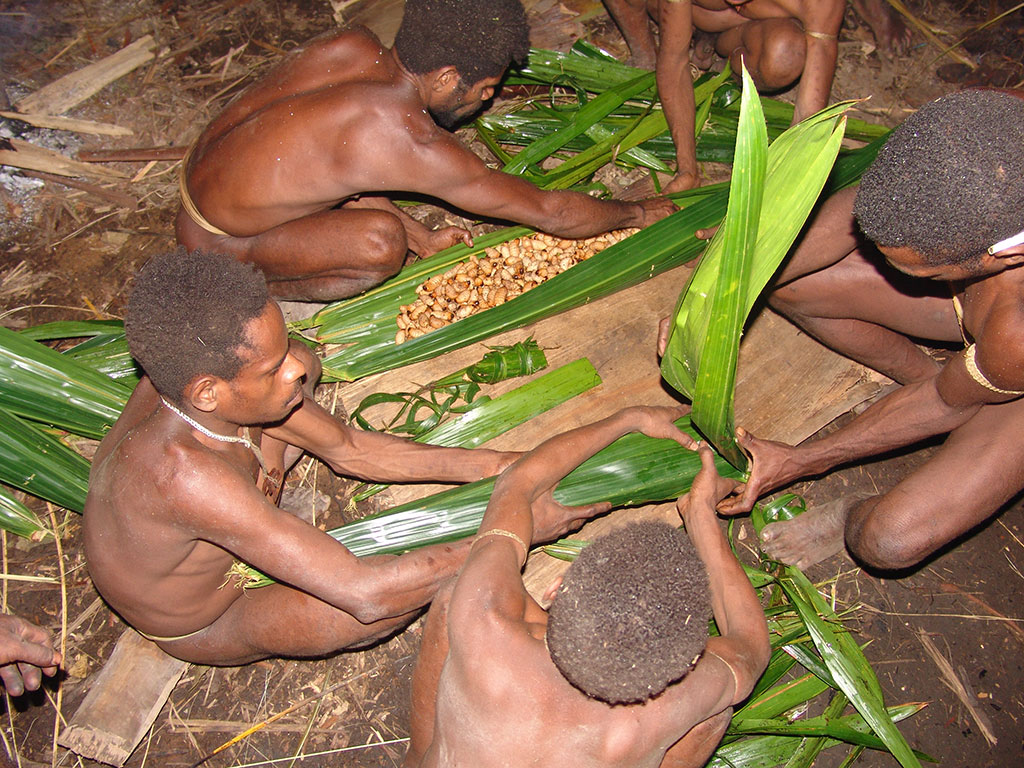
Photo from the Grand Irian Tours Kombai programme.
Destinations / Kombai
Culture · Treehouses · Sago · Gatherings · Map & transport
Kombai culture: begin with the people
A visit shaped by your hosts
Start by describing what you hope to understand: building skills, food preparation, family gatherings or the relationship between people and the forest. Local hosts decide what they wish to share. A guide can help turn an introduction into a conversation and explain the context of the places you visit.
Kombai and Korowai are distinct
These neighbouring peoples are often mentioned together in travel descriptions. A shared association with forest homes does not make their identities or visitor routes interchangeable. Ask the team to identify the communities on your itinerary and explain the arrangements made with them.
Time to understand
Choose a pace that allows you to listen, observe and ask questions. A memorable cultural encounter may be an explanation of a tool or material rather than a formal presentation. Let the people you meet describe their own lives instead of expecting a scene from an old photograph.
Treehouses and the knowledge of building
Skills passed through participation
Research on Kombai house building describes knowledge passed from parents to children through involvement in construction, with cooperation among residents. The architecture is therefore a way to explore learning and relationships as well as the finished building.
Materials and craftsmanship
Ask how materials are selected, joined and maintained. An introduction to building can help you notice decisions that are easily missed in a distant view of a house. The interest lies in the work and knowledge behind the structure, rather than simply its height.
Visit arrangements
A house may be a private home or a space with a particular local role. Confirm whether viewing or entry is appropriate. Do not assume a treehouse overnight is available: request the planned sleeping arrangement and let hosts and the local team assess any access.
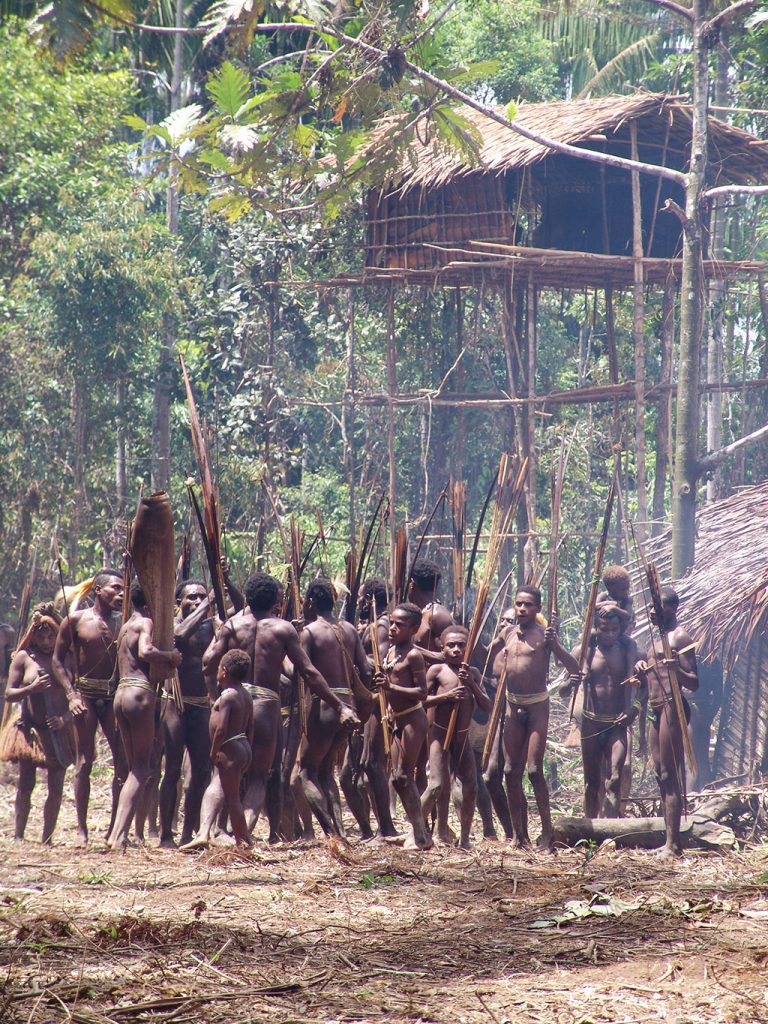
Photo from the Grand Irian Tours Kombai programme.
Sago and the work behind a meal
Learning about food
Sago provides a useful focus for understanding the connection between forest resources and food preparation. Ask whether a host-led introduction is possible and what it would involve. An explanation of the process can be valuable even when a full demonstration does not fit the visit.
Observe or participate
Discuss how much participation hosts welcome, who will explain each activity and how the visit fits their day. Share dietary requirements in advance and confirm meals separately from cultural activities. A learning experience should not depend on eating something you do not wish to try.
Everyday skills
Food preparation, carrying materials and looking after a home can offer different perspectives on daily life. Give these activities time and attention. Ask before photographing work or people, and follow guidance around homes and gardens.
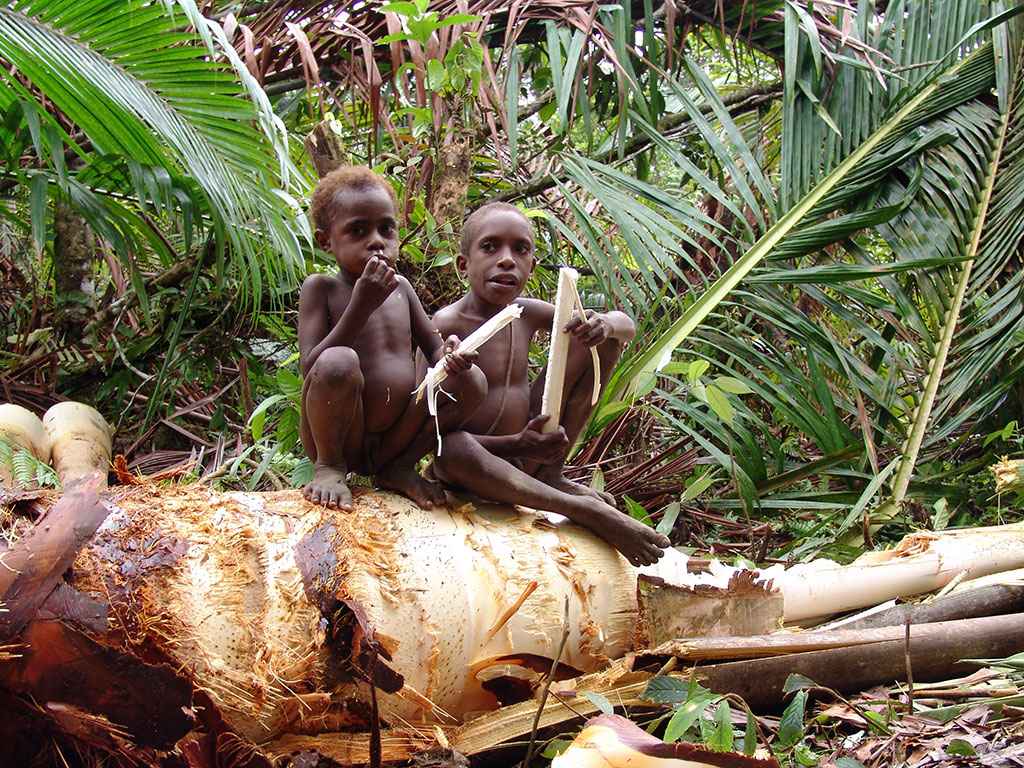
Photo from the Grand Irian Tours Kombai programme.
Sago-grub feasts and community gatherings
An occasion with its own timing
Grand Irian Tours previously advertised a Kombai expedition centred on a sago-grub feast. The programme described visiting groups entering the gathering with dance. This is evidence of a past planned programme, not a promise of a regular festival or a future performance.
Plan around an invitation
If a gathering is your main interest, first ask whether hosts are planning an event and whether visitors are welcome. Only then coordinate travel around confirmed arrangements. Ask what can be photographed and how visitors should take part.
A worthwhile visit beyond an event
A journey can focus on conversation and everyday knowledge when no gathering is available. Explain your interests so the team can discuss suitable possibilities. Avoid treating a ceremony as an activity that can simply be added to any departure.
Forest and river country in southern Papua
A route through several stages
Think of a Kombai expedition as travel through a region, with transport and hosting arranged for a specific destination. The regional map provides orientation; it does not identify a host household or a navigable walking trail.
Allow for the whole journey
Boat travel and walking can occupy substantial parts of an expedition. Ask for the sequence of overnight stops, the expected time in transit and the days available with hosts. Choose a route that matches both your available time and your comfort with remote travel.
Prepare for your Kombai journey
Walking and support
Explain your experience with muddy trails, uneven footing and long days outdoors. Ask about daily walking hours, porters, luggage limits and the equipment you will carry yourself. The current route needs to be assessed before deciding whether it suits your group.
Accommodation and meals
Request the sleeping setup at every stop, including bedding, shelter, washing facilities and mosquito protection. Ask what the team supplies and what you need to bring. Share dietary needs and discuss drinking water, meals and charging equipment.
Photography
Tell the team whether your interest is architecture, craft, portraits or forest landscapes. Ask about permission and any photography arrangements before arrival. Clear introductions and time with hosts help you understand the images you make.
Dates, access and inclusions
Request a current proposal rather than using an old departure calendar. Confirm access, local arrangements, transport, guiding and any cultural activities. Ask for an itemised quotation and the final itinerary before making separate travel bookings.
Map & historical travel estimates
Map data © OpenStreetMap contributors. Regional orientation only. Open map.
The stages below come from the programme advertised for 16–30 June 2025, reviewed on 13 September 2026. They are historical planning references, not current timetables. Boat conditions, trails and host locations may change. Waiting, airport transfers and overnight stops are additional.
Jayapura → Tanah Merah
Domestic flight. Current connection and duration to be confirmed.
Tanah Merah → Kumulo
Motorized river boat. About 7–8 hours in the historical itinerary.
Kumulo → Wanggemalo
Boat, then walking. About 4 hours by boat plus 3 hours on foot in the historical itinerary.
Wanggemalo → former host site
Guided walking. About 6 hours in the historical itinerary; current host location may differ.
Request a current Kombai proposal
Use the earlier programme to understand the style of expedition, then discuss current possibilities with the team.
Kombai travel questions
Is the 2025 feast programme still bookable?
The advertised June 2025 departure is historical. Request current availability and a new proposal.
Are Kombai and Korowai the same destination?
No. Discuss the community and route you want to visit; the names should not be used interchangeably.
Is a ceremony guaranteed?
No. Community events and visitor invitations require separate confirmation.
Will I sleep in a treehouse?
Do not assume this. Ask for confirmed accommodation and any conditions on house access.
How long does it take to get there?
The approach involves several stages. Historical estimates are shown below, but a current route and host location are needed for a reliable plan.
Can I request a culture-focused expedition?
Yes. Share your dates, group size, walking experience and interests so the team can discuss a suitable proposal.
Explore related destinations
Compare Korowai forest journeys and Asmat cultural tours.