
GRAND IRIAN TOURS · SOUTHERN PAPUA, INDONESIA
Korowai Tours: Forest Life, Treehouses & Sago Traditions
Explore Korowai culture through the knowledge, homes and daily activities of people who welcome you into their forest surroundings. Combine river travel with guided walking, and leave time to understand the relationship between households, sago and the landscape. Plan the journey with Grand Irian Tours as part of a carefully arranged expedition.

Destinations / Korowai
Culture · Treehouses · Sago · Gatherings · Map & transport · Package
Meet people, not a stereotype
A journey built around local hosts
Korowai travel begins with the people willing to receive visitors. Tell the team what you hope to learn and allow your guide to discuss appropriate visits with hosts. A thoughtful introduction and time for conversation can offer more than a busy sequence of photographs.
Different lives and choices
Historical accounts describe both forest homes and settlement life. They should not be read as a fixed description of every Korowai household today. Let your hosts explain their own circumstances and avoid expecting people to dress, work or live in a particular way for visitors.
What makes the journey distinctive
The combination of river access, forest walking and time with hosts makes this a different experience from a hotel-based sightseeing tour. Choose it for the opportunity to listen and learn, with a clear understanding of the practical demands of the route.
Treehouses: architecture and everyday space
Look at how a home is made
Accounts of Korowai building describe timber frameworks, leaf roofing and bindings made from forest materials. A home offers a starting point for questions about construction, maintenance and how space is used. The interest lies in the building knowledge as well as its height.
Understanding archival photographs
The treehouse image on this page is a museum collection photograph from 1992. It illustrates documented architecture, not the exact house you will visit or its condition today. Ask the team what is currently accessible along the planned route.
Entry and overnight stays
Seeing a house does not automatically mean entering it. The published expedition makes a treehouse overnight conditional on a host’s invitation and feasibility. Request a clear sleeping plan and an alternative arrangement before travel; access should be assessed locally.
Sago, gardens and knowledge of the forest
Food and the surrounding landscape
Sago is an important food in accounts of Korowai life. Processing the palm involves working its fibrous interior and separating the starch. Learning about this process connects food with the materials and work involved in producing it.
An introduction agreed with hosts
The published combined expedition lists a sago-processing activity in its inclusions. Ask what the current arrangement involves, who will introduce it and whether you can observe or participate. The activity should fit your hosts’ agreement and the conditions of the visit.
Observe the details
Time spent learning about tools, carrying materials or preparing food can make the forest more understandable. Ask questions through your guide and follow the hosts’ pace. Avoid treating work as a performance that must happen on request.
A walk with context
The route into the forest is part of the cultural journey. Local guidance helps connect what you pass with the places people use. Stay with your team, let guides choose the route and discuss the daily walking demands before selecting an expedition.
Gatherings, song and sago-grub feasts
Celebration in cultural accounts
Historical descriptions of Korowai sago-grub feasts connect gathering, exchange, song and dance. These accounts provide background to social relationships; they are not an annual festival calendar or a promise of a visitor performance.
Ask what is appropriate to share
If celebrations or music interest you, include this in your enquiry. Hosts decide what they wish to explain or open to visitors. A conversation about an event can be worthwhile even when the event itself is not taking place.
Keep Asmat and Korowai experiences distinct
The combined package lists a dance and drumming activity in an Asmat village. It should not be advertised as a guaranteed Korowai performance. Ask the proposal to identify where each cultural activity belongs and which arrangements are confirmed.
Photography and time with hosts
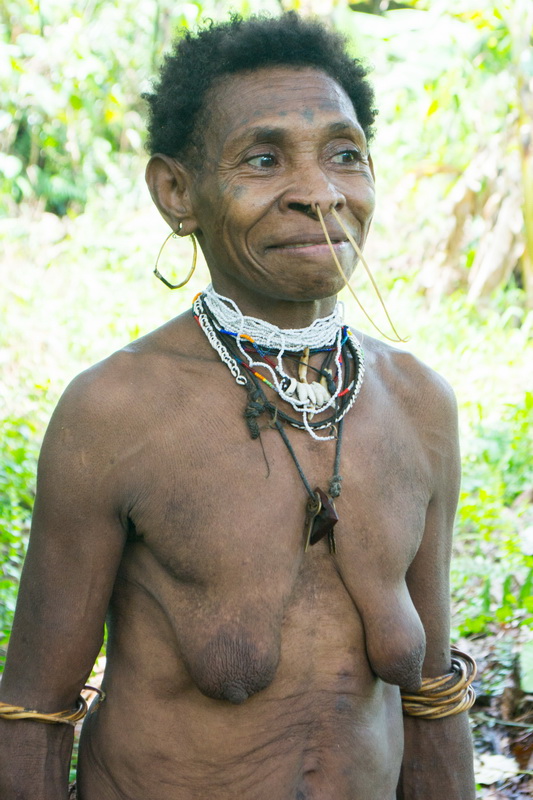
Photographs with a clear context
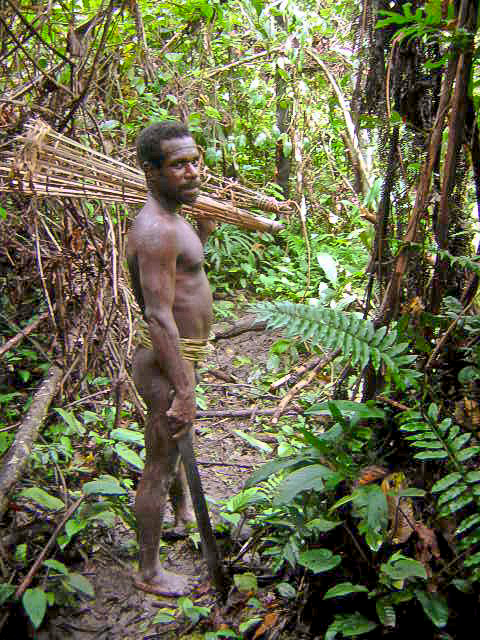
The photographs used here are dated cultural references, not documentation of a current Grand Irian Tours departure. A portrait records a particular person and moment. It should not be used to suggest that everyone you meet will have the same appearance or way of life.
Discuss your interests
Tell the team whether you are interested in architecture, portraits, food preparation or the forest. Ask about permission and any photography fees before the visit. Give people space to decline a photograph and avoid interrupting daily activities for a desired image.
Where does a Korowai expedition take you?
Forest and river country
Korowai communities are associated with the lowland forest country of southern Indonesian Papua. Access is a matter of specific rivers, villages and walking routes rather than a single attraction with a roadside entrance. The regional map below provides orientation only.
The Grand Irian Tours approach
The published fifteen-day journey starts and ends in Timika, combining Asmat visits with onward river travel toward Mabul and walking to Korowai hosts. It is a multi-stage expedition, not a direct transfer from Timika to a treehouse.
Allow flexibility
River levels, trail conditions and hosting arrangements can change the plan. Confirm the current route and the time allocated to travel, village stays and forest visits. Leave room around fixed onward flights and ask how the team handles changes.
Prepare for the expedition
Walking and support
Share your experience of muddy trails, uneven footing and carrying equipment. Request expected daily walking hours, porter arrangements and the amount you will carry yourself. Ask how the route can be assessed against your abilities before booking.
Sleeping arrangements
Ask for the planned sleeping setup at each stop, including bedding, mosquito protection, washing facilities and shelter. Hotel nights, village houses and forest camping are different arrangements. Treehouse access should never be the only accommodation assumption.
Meals and equipment
Discuss meals, drinking water, dietary needs, luggage protection and charging camera equipment. Ask what the team supplies and what you need to bring. A clear equipment list should reflect the final route rather than a generic Papua packing list.
A current proposal
Request confirmation of access, any required arrangements, guiding, transport and cultural activities for your dates. Ask the quotation to identify inclusions and exclusions. The published itinerary is a starting point for discussion, not a guarantee that every detail remains unchanged.
Map, transport & indicative journey stages
Map data © OpenStreetMap contributors. Regional overview only; no exact host location or walking route is marked. Open map.
Timika → Ewer → Agats
Regional flight and boat. Confirm flight connection; Ewer–Agats boat about 20–30 minutes.
Asmat villages → Suator/Pepera → Mabul
Chartered river boat over multiple itinerary stages. No single transfer duration is published for this full approach; request the current stage-by-stage plan.
Mabul → Korowai forest hosts
Guided walking. About 4–5 hours in the published itinerary; varies with route and conditions.
Suator → Agats, on the return
River boat. About 5–6 hours in the published itinerary; not the total return journey.
Estimates follow the published combined itinerary, checked 12 September 2026. They exclude waiting, flight connections and overnight stops. Confirm the complete route for your dates; adding these selected stages does not produce a door-to-door travel time.
Explore the combined Asmat–Korowai journey
Compare the published fifteen-day expedition, then ask the team to confirm the current route, sleeping arrangements and cultural activities.
Korowai travel questions
Is a treehouse overnight guaranteed?
No. The published itinerary makes it dependent on an invitation and suitable conditions. Confirm the planned alternative accommodation.
How long is the forest walk?
The published Mabul-to-hosts stage gives about 4–5 hours. Your actual route, pace and conditions may differ; request the current estimate.
Will I see a festival or dance?
No Korowai festival or dance is guaranteed. The combined package’s listed dance and drumming activity belongs to its Asmat section.
Can I learn about sago?
The combined package lists a sago-processing activity. Ask the team to confirm the current hosting arrangement and what participation involves.
Are these recent trip photos?
No. The page uses dated archival reference photographs with attribution. They do not identify the exact hosts or houses for a future trip.
Can I visit Korowai without Asmat?
Ask for a separate proposal. The published itinerary linked here combines both destinations; a standalone route needs its own confirmation.
How do I enquire?
Send your dates, group size, available time, walking experience and cultural interests, along with accommodation preferences and existing flights.
Continue exploring Papua
Learn about Asmat culture and river journeys or compare Kombai expedition planning.